
The Commonwealth’s Annual Shake-Down: Why Virginia's Vehicle Inspection Mandate Needs to Go
Every year, millions of Virginians participate in a mandated ritual that is ostensibly about public safety, but in reality, functions as a state-sanctioned shakedown. The annual Virginia Vehicle Safety Inspection is an antiquated, highly subjective program that places an undue financial burden on working-class citizens while opening the door to widespread consumer fraud. It is time to abolish the mandatory inspection requirement—a move already made by states like New Jersey, and currently being pursued by several others.
A Built-In Conflict of Interest
The fundamental flaw in Virginia’s system is who conducts the inspections. The state mandates the requirement, but private service stations and auto dealerships execute it.
The Commonwealth charges citizens $16 for a car inspection. For a private garage, tying up a mechanic for 40 to 60 minutes for a mere $16 is a guaranteed financial loss when their standard hourly rate is anywhere from $65 to $100. Because the system financially disincentivizes the very shops performing the service, there is massive pressure to recover that lost revenue by identifying "required repairs."
When proposals arise to get rid of the requirement, the automotive repair industry consistently lobbies to keep it in place. The most recent major battle happened in 2020, when then-Governor Ralph Northam proposed abolishing the inspection program. He argued that data showed no connection between the inspections and highway safety, and that ending the program would save Virginians about $150 million a year.
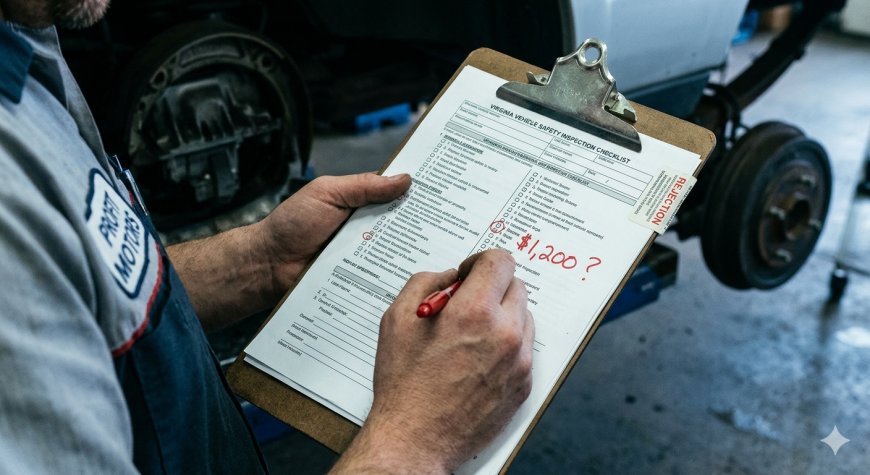
This dynamic breeds fraud. A mechanic can easily claim a $400 electronic module needs replacing because of a dashboard light, when the real culprit is a $4 fuse. For the average motorist, verifying this claim is nearly impossible without paying for a second opinion.
The Rejection Sticker Trap
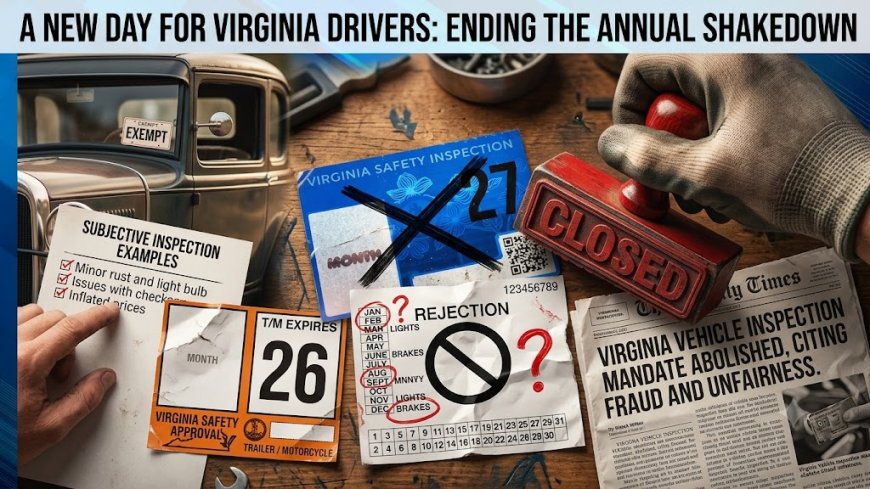
The current inspection process is designed to corner the consumer. The moment a vehicle enters the bay, the inspector removes the current state inspection sticker.
If the mechanic finds a subjective failure, the driver is immediately placed in a bind:
-
Pay the shop's premium to fix the issue on the spot.
-
Accept a "Rejection" sticker, which acts as a neon sign for law enforcement to pull you over and issue a citation if it remains on the windshield for more than 15 days.
This arbitrary 15-day window ignores the reality of working-class pay cycles. A surprise $1,200 repair bill for an oxygen sensor or a minor exhaust leak can devastate a family's budget, effectively holding their primary mode of transportation hostage over a mandate that doesn't definitively prove a car is safe year-round.
The Antique Exemption Hypocrisy
Perhaps the most glaring evidence that this program is more about revenue and lobbying than actual road safety is the state's own exemption list.
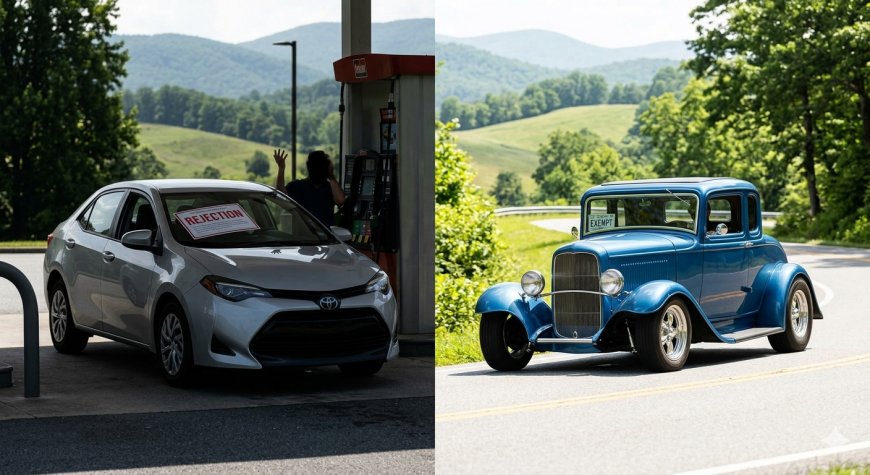
In Virginia, vehicles registered as "antique" are entirely exempt from the annual safety inspection. This creates a massive double standard: the oldest, most mechanically outdated, and structurally vulnerable vehicles on the road are given a free pass by the state, while a citizen driving a modern five-year-old sedan is heavily penalized for a minor sensor malfunction. If the inspections were truly a life-or-death necessity for public safety, the oldest cars on the road wouldn't be legally permitted to bypass them.
The Push for Abolition
The system is highly subjective—a vehicle that fails for five specific reasons at one garage can often be taken to a second shop across town and fail for entirely different, unrelated reasons.
Citizens are organizing against this outdated mandate. A grassroots push to hold the state accountable for this regulatory overreach has gained significant traction, detailing the inherent corruption of handing private garages a blank check to enforce state mandates.
You can read the full breakdown of the financial burdens, the subjective inspection checklists, and the growing movement to end the program at the official petition here:
If the Commonwealth insists on mandating an inspection, it should fund state-run facilities staffed by state employees with zero financial interest in the repair work. Until then, the current program remains a $100 million-a-year revenue generator built on the backs of everyday drivers.
What's Your Reaction?
 Like
0
Like
0
 Dislike
0
Dislike
0
 Love
0
Love
0
 Funny
0
Funny
0
 Wow
0
Wow
0
 Sad
0
Sad
0
 Angry
0
Angry
0
Press What Matters affiliate