
Driving Dirty: What Happens if you GET CAUGHT without a Drivers License?
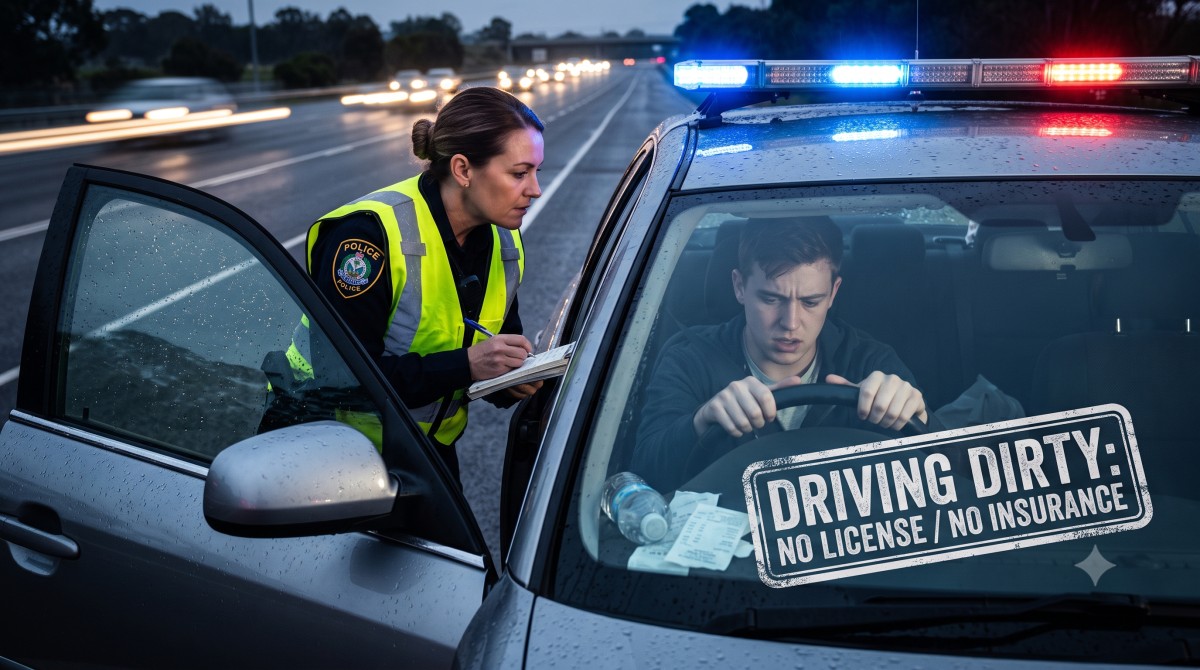
Driving is not a right; it is a privilege, and in the United States, that privilege comes with significant responsibilities. Chief among them is maintaining a valid driver’s license and up-to-date insurance. However, many individuals choose, for various reasons, to operate a vehicle without either. This act, often referred to as "driving dirty," can lead to severe legal and financial consequences. While penalties differ across all 50 states, this article dives deep into the specific ramifications in the Commonwealth of Virginia and the State of Florida.
Part 1: The Trap Door of Unlicensed Driving
The US Landscape
Across the country, driving without a license can range from a simple traffic infraction to a criminal misdemeanor, or even a felony for repeat offenders or if associated with grave negligence. Beyond immediate fines, a conviction can trigger an automatic suspension of any future driving privilege, lead to vehicle impoundment, and significantly complicate getting a license in the future.
In Focus: Virginia
Virginia is known for its strict enforcement of traffic laws, and unlicensed driving is no exception. In the Commonwealth, driving without a valid license is a criminal offense under § 46.2-300.
| Offense | Classification | Potential Penalties |
| First Offense | Class 2 Misdemeanor | Up to 6 months in jail, a fine up to $1,000, and a 90-day license suspension. |
| Second or Subsequent Offense | Class 1 Misdemeanor | Up to 12 months in jail, a fine up to $2,500, and a 90-day license suspension. |
A judge has the discretion to dismiss the charge if you can present a valid license to the court on or before your court date, but this is a courtesy, not a rule. The core offense remains a criminal misdemeanor, meaning a permanent criminal record.
In Focus: Florida
Florida treats unlicensed driving primarily as a moving violation, although repeat offenses can escalate. If you have never had a license and are caught, you are still violating Florida law.
For a first offense in Florida, the immediate penalties may appear less severe than Virginia, typically starting as a citation (ticket). However, the long-term impact is a mandatory non-criminal moving violation on your driving record. To get your license back (or to get one for the first time), you face a labyrinth of reinstatement fees that increase with every offense. Repeated unlicensed driving in Florida can absolutely lead to misdemeanor charges, criminal record, and vehicle impoundment.
Part 2: The Silent Trap: Driving Without Insurance
Driving without insurance, known legally as "financial responsibility," is a major offense nationwide. If you are uninsured and cause an accident, you are personally liable for every dollar of bodily injury and property damage, which can instantly result in bankruptcy.
In Focus: Virginia
Virginia gives vehicle owners a choice, but it's a dangerous one. If you can’t show proof of insurance, you must pay a $500 Uninsured Motorist Fee to the DMV. This fee does not provide insurance. If you choose this path and then get caught driving without insurance, you face severe penalties:
-
Immediate Suspension: The DMV will immediately suspend your driver’s license, vehicle registration, and license plates.
-
$600 Statutory Fee: You must pay a $600 penalty.
-
SR-22 Requirement: For the next three years, you are required to maintain an SR-22 (a high-risk insurance certificate). This makes your insurance premiums skyrocket.
In Focus: Florida
Florida is a "no-fault" insurance state with a minimum requirement of $10,000 Property Damage Liability (PDL) and $10,000 Personal Injury Protection (PIP). If you get caught driving without it, your driving privilege and registration will be suspended. To restore them, you must provide proof of current insurance and pay a reinstatement fee, which starts at $150 and climbs to $500 for a third offense within three years.
Part 3: The Danger Factor: Having Children with You
The gravity of "driving dirty" escalates significantly if you are stopped and have minor children in the vehicle. This is because the legal concept of "negligence" takes on an aggravated form. While driving without a license itself is a charge, driving unlicensed with children introduces a separate, much more severe offense: Child Endangerment or Felony Child Neglect.
In all 50 states, the law views an unlicensed and uninsured driver as significantly more likely to be a danger to themselves and others. By choosing to drive illegally with children present, you are creating an inherently dangerous environment.
| Area | Impact of Children Present |
| National | Introduces potential child endangerment/neglect charges; immediate mandatory report to Child Protective Services (CPS); possible felony classification. |
| Virginia & Florida Focus | While the license/insurance penalties are standard, prosecutors can use the presence of children to upgrade secondary charges to severe misdemeanors or felonies (e.g., Felony Child Neglect in Virginia). A conviction on a felony can mean prison, permanent felony record, and loss of future parental rights. |
Conclusion
"Driving dirty" in the US is a game with terrible odds. A simple traffic stop can spiral into a life-altering event. In Virginia, it is a criminal act with immediate jail possibilities. In Florida, it’s a financial trap of increasing fees and moving violations. If you add minors to the equation, you risk not just your license and your bank account, but your family's future. The only safe way to operate a vehicle is to maintain a valid license and minimum insurance, in full compliance with the law.
Frequently Asked Questions: Driving Unlicensed and Uninsured
What's Your Reaction?
 Like
0
Like
0
 Dislike
0
Dislike
0
 Love
0
Love
0
 Funny
0
Funny
0
 Wow
0
Wow
0
 Sad
0
Sad
0
 Angry
0
Angry
0

Press What Matters allows anyone to become a citizen journalist! Get paid per click for all of your news articles, stories or videos.