
Virginia's Clean Slate Law Takes Effect in 2026: Here's How Eligible Individuals Can Begin the Process
Beginning July 1, 2026, Virginia's Clean Slate Law will provide thousands of Virginians with a second chance by allowing certain criminal records to be automatically sealed while creating a petition process for others seeking relief.
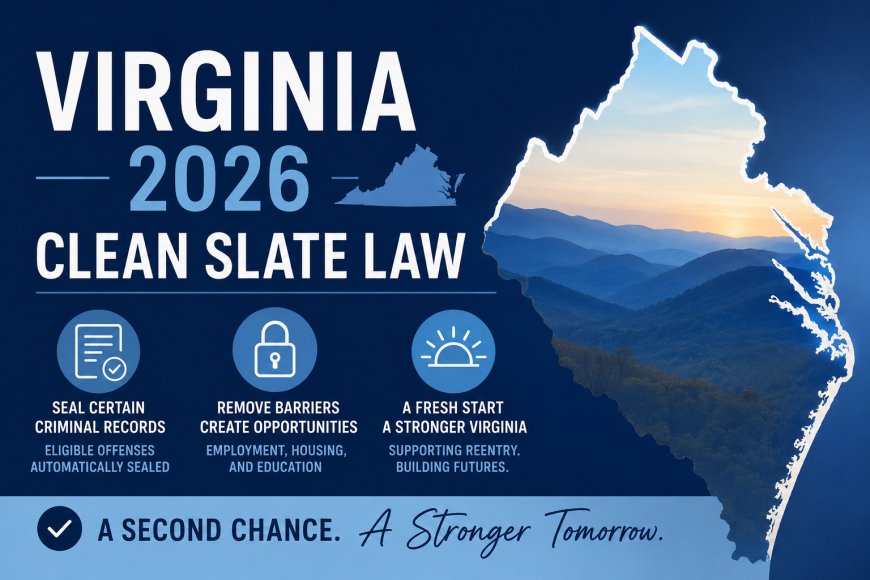
The law is designed to remove barriers that can make it difficult to obtain employment, housing, professional licenses, and educational opportunities. Supporters say the legislation promotes successful reentry and strengthens communities by helping individuals move forward after completing their sentences and remaining crime-free.

Forms: https://www.vacourts.gov/forms/circuit/crim_sealing
Automatic Sealing and Petition-Based Relief
Under the new law, some records will be sealed automatically after a waiting period. Other offenses will require individuals to file a petition in circuit court. Certain convictions, including many violent crimes and sex offenses, are not eligible for sealing.
Individuals who believe they may qualify are encouraged to review the eligibility requirements and gather the necessary court documents before beginning the process.
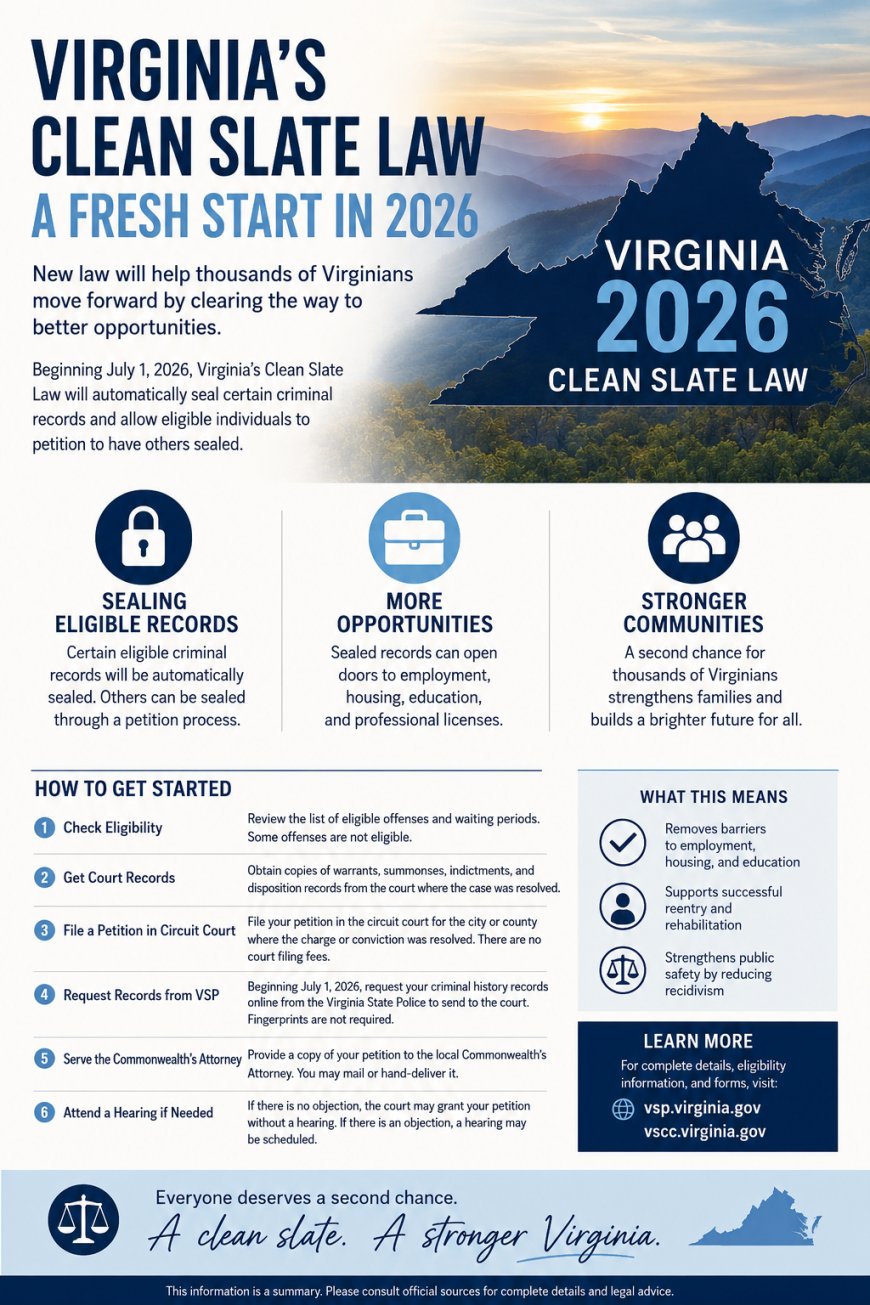
How to Get Started
1. Determine Eligibility
Review the list of qualifying offenses and waiting periods. Eligibility information is available through the Virginia State Police and Virginia State Crime Commission.
2. Obtain Court Records
Collect copies of warrants, indictments, summonses, and final dispositions from the court where the case was handled.
3. File a Petition
Petitions are filed in the circuit court where the charge or conviction occurred. There are no court filing fees associated with record-sealing petitions.
4. Request Criminal History Records
Beginning July 1, 2026, the Virginia State Police will provide an online system allowing criminal history records to be submitted directly to the court.
5. Notify the Commonwealth's Attorney
Petitioners must provide a copy of the filing to the local Commonwealth's Attorney.
6. Attend a Hearing if Necessary
If objections are filed, the court may schedule a hearing before deciding whether the record should be sealed.
As the law takes effect, legal aid organizations and attorneys across the Commonwealth are expected to assist eligible individuals with navigating the process. For many Virginians, the Clean Slate Law represents an opportunity to move beyond past mistakes and pursue a fresh start.
If someone believes they may qualify under Virginia's 2026 Clean Slate Law, these are the official resources and steps to get started:
📌 Official Virginia State Police FAQ
The Virginia State Police explains eligibility, waiting periods, qualifying offenses, and where to file petitions.
🔗 Virginia State Police Record Sealing FAQ
📌 Virginia State Crime Commission
Overview of automatic sealing and petition-based sealing beginning July 1, 2026.
🔗 Virginia State Crime Commission – Sealing of Criminal Records
📌 Virginia Code
The actual statutes governing record sealing.
🔗 Virginia Code §19.2-392.5 et seq.
How to Start the Process
1. Determine whether the offense qualifies
Many misdemeanors and some Class 5 and 6 felonies may qualify. Certain offenses—including violent crimes, sex offenses, crimes against family or household members, and firearm-related felonies—are excluded.
2. Obtain court records
Gather copies of warrants, summonses, indictments, and disposition records from the court where the case was concluded.
3. File a petition in Circuit Court
Petitions must be filed in the circuit court for the city or county where the charge or conviction was resolved. There are no court filing fees.
4. Request criminal history records from Virginia State Police
Beginning July 1, 2026, the Virginia State Police will provide an online portal allowing individuals to send their criminal history records directly to the court. Fingerprints are not required.
5. Serve the Commonwealth's Attorney
A copy of the petition must be provided to the local Commonwealth's Attorney. Mailing or hand-delivering it can avoid service fees.
6. Attend a hearing if required
Some petitions may be granted without a hearing if the Commonwealth's Attorney does not object. Otherwise, the circuit court may schedule one.
Free or Low-Cost Legal Help
Many people will have records sealed automatically, while others will need to file a petition.
What's Your Reaction?
 Like
0
Like
0
 Dislike
0
Dislike
0
 Love
0
Love
0
 Funny
0
Funny
0
 Wow
0
Wow
0
 Sad
0
Sad
0
 Angry
0
Angry
0

Press What Matters affiliate