
The Fight for Newport News Park: Residents Demand Transparency Over Proposed Developments

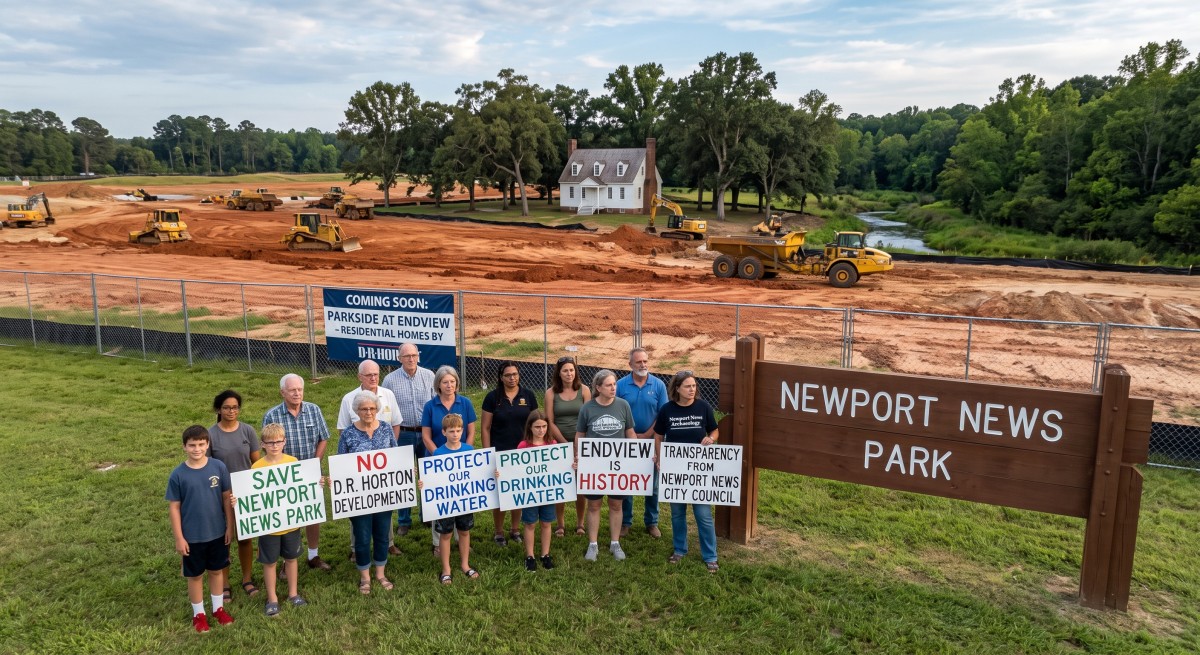
Newport News residents are expressing deep concern over the potential destruction of the environmental and historical landscapes surrounding Newport News Park. The controversy centers on proposed housing and industrial developments in the Endview and Lee Hall corridors, with citizens citing a lack of transparency from city officials regarding the plans. A primary focus of their concern is D.R. Horton, a housing developer slated to build on the land, who residents argue has a documented history of environmental non-compliance.
Sep 29, 2026 - 13:01
Updated: 18 days ago
The Fight for Newport News Park: Residents Demand Transparency Over Proposed Developments

The Developments at Endview and Lee Hall The Endview and Lee Hall areas are multi-component archaeological sites encompassing indigenous, colonial, and modern history, and are currently pristine greenfields. Despite their historical and environmental significance, the City of Newport News has rezoned approximately 143 acres from mixed-use and park designations to M1 light industrial use. Additionally, a new housing development titled "Parkside at Endview" is planned to encompass the Endview archaeological site. Residents argue that instead of utilizing the 500 acres to provide food access for a community explicitly identified as a food desert, the city chose to propose industrial and housing complexes across three large plots.

Environmental Concerns and D.R. Horton A major point of contention is the involvement of D.R. Horton, a developer that the document claims is notorious for environmental and historical management violations locally and nationally, including a previous lawsuit settlement for Clean Water Act non-compliance.

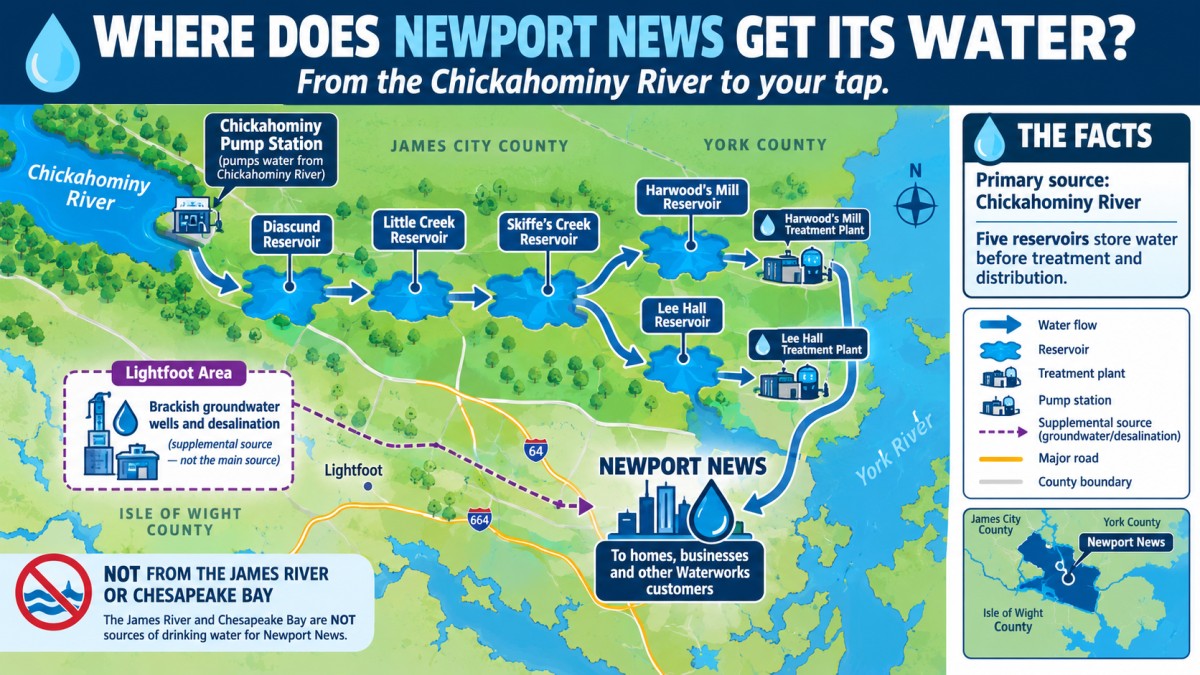
The proposed development at Endview will be built around the ancient freshwater source of the Warwick River, which is the largest tributary in Newport News. This freshwater spring feeds into Lebanon Run and eventually the Lower Lee Hall Reservoir, a major source of the city's drinking water. Residents fear that the developer's mass clearing and grading methods will cause severe erosion and long-term runoff pollution, devastating the local ecosystem and putting the health of residents and the city's drinking water at risk.

Desecration of History The Endview and Lee Hall corridors hold immense historical value. Endview Plantation is one of the last remaining colonial buildings in the city, and Lee Hall survives as the only major 19th-century plantation house on the Lower Peninsula.

According to the provided document, the proposed development threatens to bulldoze highly sensitive archaeological sites without completing the required evaluations. Necessary Phase II and Phase III archaeological investigations—which are required for compliance with Section 106 of the National Historic Preservation Act—have not been fulfilled prior to the development plans. Threatened sites include:

  • A 19th-century, post-emancipation African American homestead belonging to a man named Harry, documented on an 1863 map.

  • An 18th-to-19th-century traditional post-in-ground architectural structure.

  • An enslaved burial ground, which is currently only slated for a limited 4-acre greenspace buffer that residents fear is insufficient to protect it from infrastructure and grading damage.

Furthermore, the initial stage of D.R. Horton's five-stage development plan is projected to directly impact and destroy the most culturally sensitive areas first.

Lack of Transparency and Call to Action Citizens allege that the city has not been fully transparent about the plans and state that runoff permits have already been bypassed, according to FOIA release data. Residents are calling for a proactive review of the sites before any development is allowed to commence, and they are configuring a Citizens Committee to review details pertaining to the developments and advise the Council of Virginia Archaeologists.

The "Save Newport News Park" initiative urges the public to demand transparency, enforce enhanced environmental and historic buffers, and ensure that the city invests in existing communities rather than sacrificing irreplaceable cultural and environmental landscapes.

Frequently Asked Questions

The City of Newport News rezoned 143 acres of historically and environmentally pristine greenfields for light industrial use and a massive housing development called "Parkside at Endview." Residents are fighting back, citing a severe lack of transparency from the city and the impending destruction of irreplaceable cultural heritage and vital ecosystems.

D.R. Horton has a documented, notorious track record of environmental non-compliance, both locally and nationally. This includes a previous lawsuit settlement for violating the Clean Water Act. Residents are terrified that the developer's aggressive mass clearing and grading methods will cause devastating runoff pollution.

The development is slated to be built directly around the ancient freshwater source of the Warwick River. This spring feeds into Lebanon Run and ultimately the Lower Lee Hall Reservoir—a primary source of the city's drinking water. Construction runoff and severe erosion could poison this critical water supply.

The area is a multi-component archaeological goldmine. Developers are threatening to bulldoze a 19th-century post-emancipation African American homestead, an 18th-to-19th-century architectural structure, and an enslaved burial ground—which has only been given a meager, insufficient 4-acre buffer against heavy infrastructure grading.

The development plans are moving forward without fulfilling the necessary Phase II and Phase III archaeological investigations. These thorough evaluations are required for compliance with Section 106 of the National Historic Preservation Act to protect culturally sensitive sites before they are destroyed.

Rather than sacrificing the land for industrial parks and housing complexes, residents point out that the community is explicitly identified as a food desert. They argue the 500 acres of land could and should be utilized to provide desperately needed food and agricultural access for the area.

They are demanding an immediate halt to the project until proper, transparent environmental and archaeological reviews are completed. They want the city to enforce enhanced environmental buffers, stop bypassing runoff permits, and invest in the existing community rather than selling out to private developers. ```eof

D.R. Horton, Inc. (NYSE: DHI) is the largest homebuilder by volume in the United States, a position it has held every year since 2002. It is a publicly traded company headquartered in Arlington, Texas. Founded in 1978 in Fort Worth by Donald Ray Horton (1950–2024), it began as a local operation and expanded nationwide. The company went public in 1992.

What's Your Reaction?

Like Like 0
Dislike Dislike 0
Love Love 0
Funny Funny 0
Wow Wow 0
Sad Sad 0
Angry Angry 0
Bob Dobalina

Press What Matters affiliate