
From Black Owned to Bankrupt: How Ridiculous DEI Policies Hurt EVERYONE
Newport News maintains an active municipal Diversity, Equity, and Inclusion (DEI) program called ABIDE (Access, Belonging, Inclusion, Diversity, and Equity). Led by Program Administrator Devon Trotter, CPCC, ACC, ABIDE serves as the city's primary framework for promoting these principles within the municipal workforce. The program aims to ensure that the city's employees better reflect the diverse community they serve through targeted strategies in recruitment, retention, promotion, and equitable decision-making.
DEI is often called racist because it explicitly treats people differently based on race (and other group identities) rather than as individuals. This violates the core principle of colorblind equality that underpinned the Civil Rights Act of 1964 and the classical liberal ideal that "racism" means judging or allocating opportunities by race.
DEI is racist to the extent it uses race as a proxy for worth or allocates burdens/benefits by ancestry — the definition of racism under a consistent, individualist standard.
Newport News, Virginia, under Mayor Phillip Jones, provides a textbook case of how race-focused "equity" initiatives prioritize identity over competence — and why they ultimately fail the very communities they claim to help.
Newport News Doubles Down on DEI
The City of Newport News operates an official program called ABIDE — Access, Belonging, Inclusion, Diversity, and Equity. Led by a dedicated Program Administrator, its stated goal is to make the city's workforce "reflective of the vibrant community it serves" through targeted recruitment, retention, promotion, unconscious bias training, microaggressions workshops, and embedding "equity" into all departmental decisions. https://www.nnva.gov/DocumentCenter/View/35796/DEI-Program-Administrator
Mayor Phillip Jones, the young, Harvard-educated mayor, has publicly defended DEI-style programs. He criticized Trump administration efforts to roll back federal DEI and "environmental justice" initiatives, framing them as necessary fairness standards for historically underserved areas. He has also pushed back against Defense Secretary Pete Hegseth's skepticism of DEI in the military.
The city doesn't hide it. ABIDE is on the official website with plans for employee resource groups, cultural celebrations, and equity embedded in decision-making.
- Racial stereotyping and classifications: DEI often assumes people of certain races share inherent traits, viewpoints, or disadvantages ("racial equity" over individual equality). The Supreme Court in Students for Fair Admissions v. Harvard (2023) explicitly rejected this, ruling that racial classifications in admissions violate Equal Protection because they stereotype, harm individuals, and lack measurable endpoints. Chief Justice Roberts emphasized that the government "may never use race as a stereotype."
- "Equity" vs. Equality: "Equity" (equal outcomes by group) often requires treating people differently by race to adjust for disparities. This directly contradicts color-blind equal protection.
- Government DEI: Public universities, agencies, and funded programs using race preferences in hiring, promotions, training, grants, or contracting are especially vulnerable. Post-2023, courts and the Trump administration (via executive orders in 2025) have targeted these as illegal
The Fundamental Problem
Critics argue this approach is discriminatory by design. Instead of color-blind hiring and promotion based on merit, qualifications, and performance, it pressures institutions to prioritize racial demographics. When outcomes don't match population proportions — due to well-documented average group differences in cognitive ability, educational attainment, crime rates, and family structure — the only way to achieve "equity" is to discriminate against higher-performing groups, especially Whites and Asians.
This isn't theoretical. Post-Students for Fair Admissions (2023), race-based preferences in admissions faced legal scrutiny for penalizing Asians and Whites. Workplace and government versions face similar challenges under Title VII and the 14th Amendment.
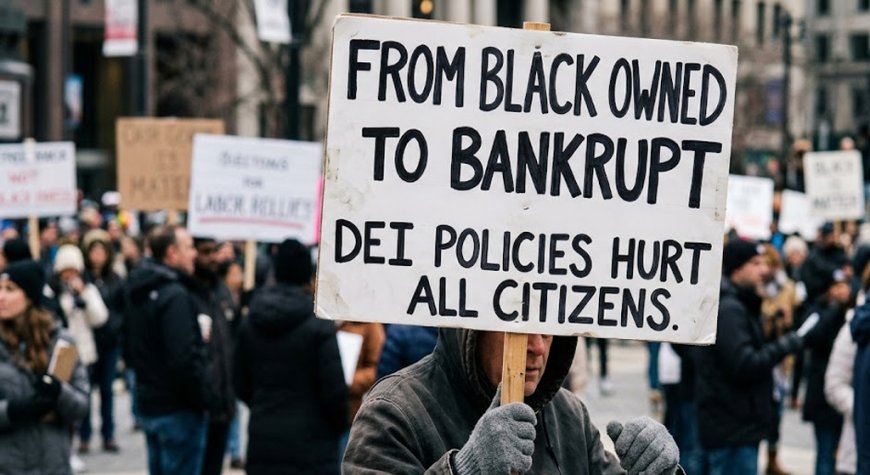
Real-World Damage: "From Black Owned to Bankrupt"
Many Black-owned businesses that surged during the post-2020 DEI boom have struggled or failed as corporate enthusiasm faded. Brands relied on moral-panic purchasing and supplier diversity quotas rather than building genuine customer demand and operational excellence. When the subsidies, set-asides, and virtue-signaling dried up, reality hit: customers want good products at good prices, not racial checkboxes.
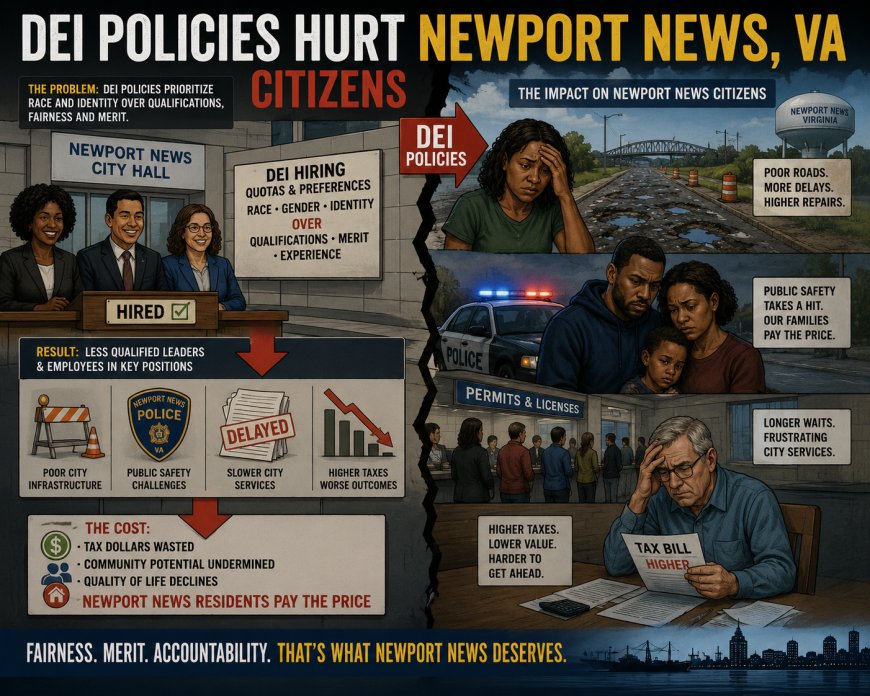
This pattern repeats in government and institutions. Lowering standards for "diversity" creates mismatch — placing people in roles where they are less likely to succeed — which breeds resentment, lowers overall competence, and hurts service delivery. Everyone loses: taxpayers get worse results, qualified candidates (of all races) get passed over, and beneficiaries face higher failure rates.
In a military-heavy city like Newport News, weakening merit in public safety, contracting, or city services carries extra risk. Cohesion and competence matter when lives are on the line.
Hurting the People It's Supposed to Help
- Undermines genuine achievement: Successful Black professionals and businesses get tainted with the assumption they needed preferences.
- Fosters division: Explicit racial favoritism breeds backlash and cynicism.
- Ignores root causes: Crime, family breakdown (e.g., high single parenthood rates), and cultural factors explain far more of today's gaps than current discrimination. DEI distracts from hard cultural and behavioral reforms.
- Economic harm: Competence-based systems built modern prosperity. Race engineering reduces innovation, efficiency, and growth.
Mayor Jones promotes education, public safety, and economic development alongside ABIDE. But pushing racial outcomes over individual merit creates tension with those goals. Cities thrive on attracting talent, business investment, and safe streets — not meeting demographic quotas.
A Better Path
True fairness means color-blind policies: equal rules, merit-based decisions, and removing barriers for individuals regardless of race. Judge people by content of character, skills, and results — exactly as civil rights pioneers originally demanded.
Newport News residents deserve competent city government, not ideological experiments. As federal pressure against illegal race preferences increases, cities clinging to overt DEI like ABIDE may face lawsuits, wasted resources, and declining performance.
The data is clear: merit works. Racial engineering doesn't. It doesn't just disadvantage Whites and Asians — it harms Black communities and society as a whole by lowering standards for everyone.
What's Your Reaction?
 Like
0
Like
0
 Dislike
0
Dislike
0
 Love
0
Love
0
 Funny
0
Funny
0
 Wow
0
Wow
0
 Sad
0
Sad
0
 Angry
0
Angry
0

Press What Matters allows anyone to become a citizen journalist! Get paid per click for all of your news articles, stories or videos.